Small Space Storage Ideas That Use Every Wall
In a small room, floor space is precious — but the walls are usually standing empty. Every bare wall is a chance to store books, bags, kitchen kit, and clutter without buying one more piece of furniture or shuffling everything around. These ten ideas work with what’s already there, and most of them need nothing more than a few hooks, brackets, or a shelf you can take down when you move.
Everything here is renter-friendly and renovation-free. No knocking down walls, no built-ins — just smart use of the vertical space you already have. Pick one wall, give it one job, and watch your rooms feel bigger.

1. Choose a Tall, Narrow Shelf (30–40 cm Deep) Against One Wall
A tall, narrow shelf is the fastest way to gain storage without eating floor space. At 30–40 cm deep it holds books, baskets, and folded jumpers, but it stays close to the wall so walkways stay clear. Go as high as the ceiling allows — the top shelves are perfect for things you rarely touch, which frees the lower ones for daily life.
If you rent, choose a freestanding tower that leans or anchors with a strap behind it — no drilling into brick. Measure the wall width first and leave about 10 cm of breathing room on each side so the shelf doesn’t crowd door frames or light switches.

2. Use the Space Above Doors, Desks, and Beds for Low-Use Items
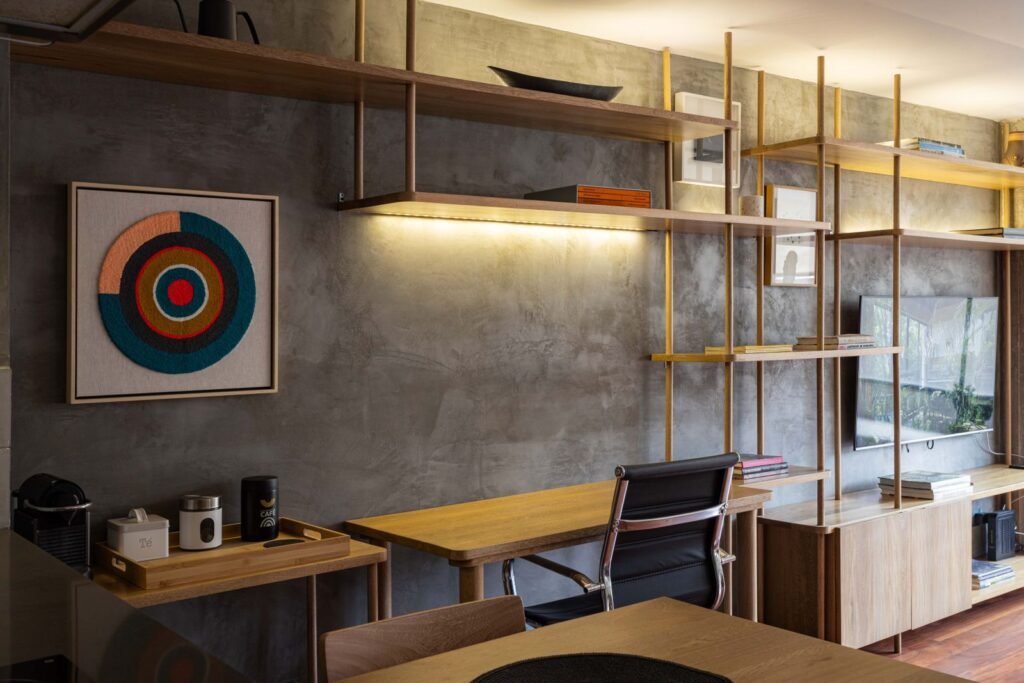
The strip of wall above a door, desk, or bed is storage nobody competes for. One or two slim shelves here hold photo albums, spare bedding, or craft boxes — things you need a few times a year, not every day. It’s the room’s attic, except you don’t need a ladder to find it.
Keep these shelves 20–25 cm deep and light, and stick to damage-free brackets or no-drill rails if you’re renting. Leave enough clearance that doors swing freely and you never bonk your head sitting up in bed — measure from the door frame before you buy.
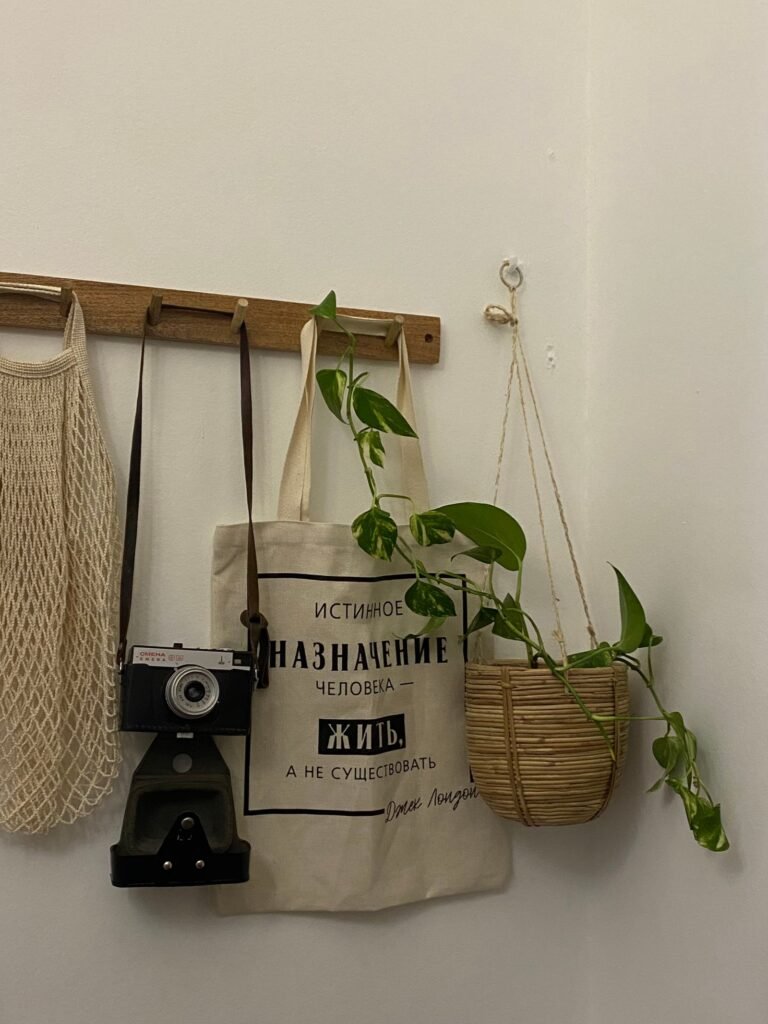
3. Add a Wall Rail with Hooks for Bags, Hats, and Kitchen Tools
A single rail with S-hooks or peg hooks turns a bare wall into a landing spot for the stuff that usually ends up on chairs. Hang tote bags, hats, and scarves by the front door, or spatulas and small pans by the cooker. Everything gets a visible home, so tidying takes seconds instead of a whole afternoon.
Rails are renter-friendly when mounted with heavy-duty adhesive strips or hung from existing picture hooks. Put a small tray or shelf under the rail to catch drips from umbrellas or wet shopping bags, and keep the rail clear of anything you don’t actually grab weekly.
4. Mount a Pegboard for Tools, Craft, or Kitchen Kit
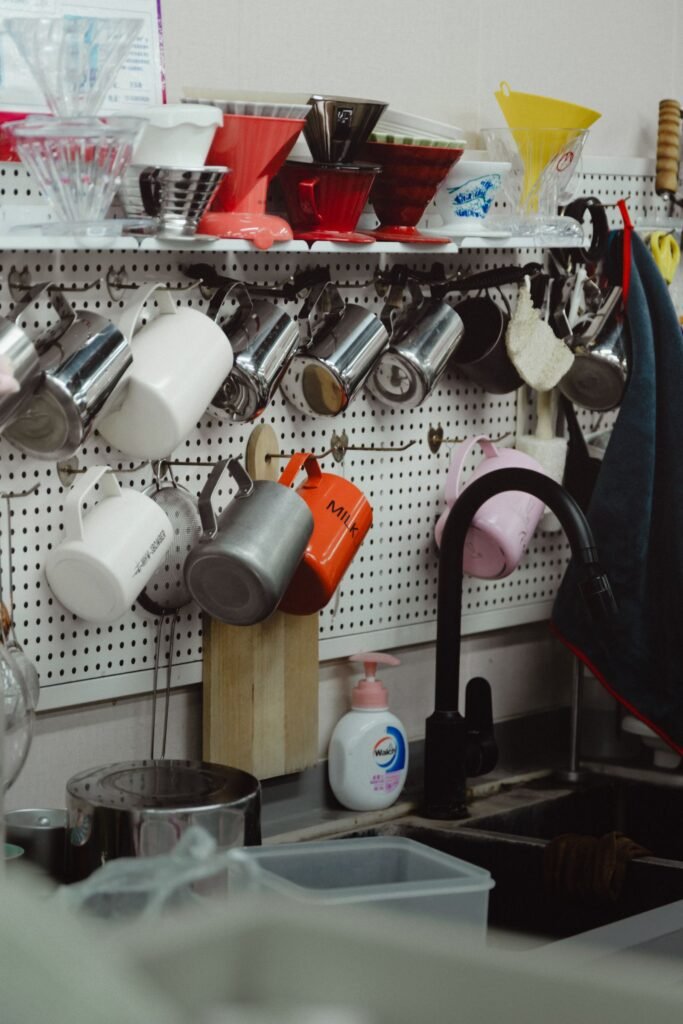
A pegboard is storage you can rearrange in minutes. Hooks, small shelves, and baskets clip on and off, so the board grows with your hobbies — a sewing kit one month, seed packets and twine the next. Few things flex as well when a tiny home has to do many jobs.
Choose a board that stands on a desk or hangs from two removable hooks to avoid drilling. In the kitchen, hang only what you wash often; grease settles on everything eventually, so keep the board away from the hob and wipe it down now and then.
5. Float Shelves into Dead Corners
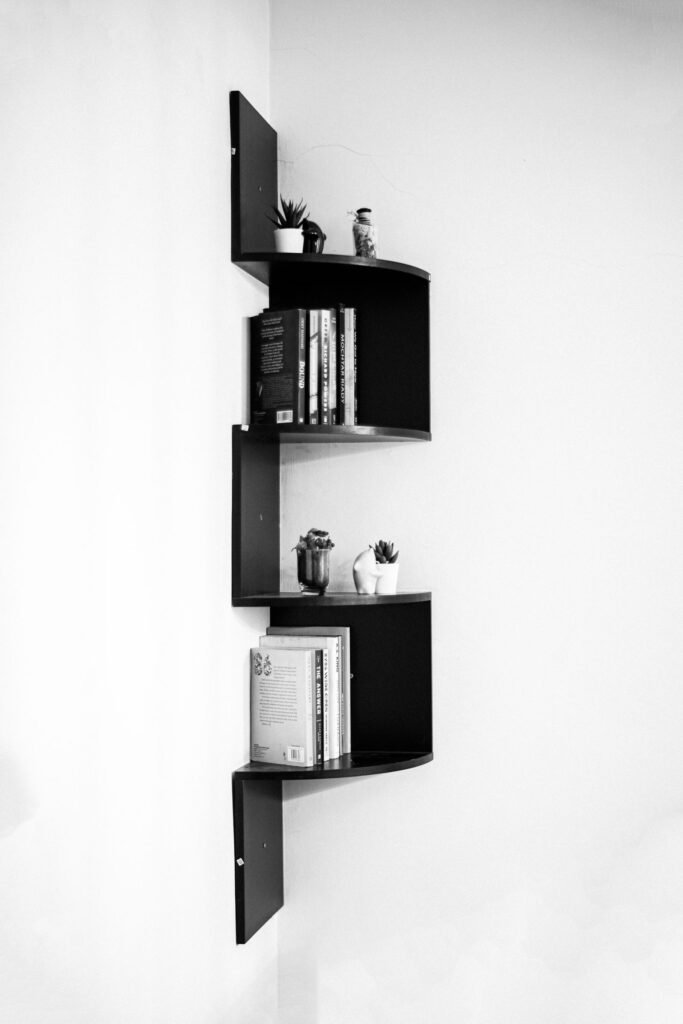
Corners are where clutter goes to hide. Two or three floating shelves stacked up a corner turn that dead angle into a book nook, a tea station, or a home for your trailing plants. Because corners are rarely in the walkway, they’re free storage real estate most people ignore.
Corner shelves only need to be 15–20 cm deep to work, and most brackets take under ten minutes to fit. Stagger them slightly rather than lining up in a straight column — it looks calmer and holds odd-sized bits like mugs and jars far better.
6. Hang Wall-Mounted Baskets for Books and Throws
Wall baskets give you the softness of baskets without the floor space of a storage cube. One basket holds the novel you’re reading, another the throw you grab for film nights, a third the charging cables that migrate everywhere. They’re storage and decor in one.
Light wire or woven baskets hang happily from adhesive hooks rated for 2–3 kg. Keep them at arm’s height beside the sofa or bed — anything higher becomes a stretch and a topple risk, and these are meant for daily grab-and-go things.

7. Put Seasonal Boxes on the Highest Shelf (Labelled)
Christmas baubles, summer picnic kit, spare blankets — these live on the top shelf, out of sight and out of mind but never out of reach. Uniform boxes in one colour keep the highest row looking calm instead of chaotic, which matters when the shelf is at eye level for taller visitors.
Label every box on two sides with big clear tags so you can read them from a step stool. Write the season on the front — WINTER, SUMMER — and future you will be genuinely grateful when the swap-over day comes.
8. Keep Heavy Items Low and Light Items High
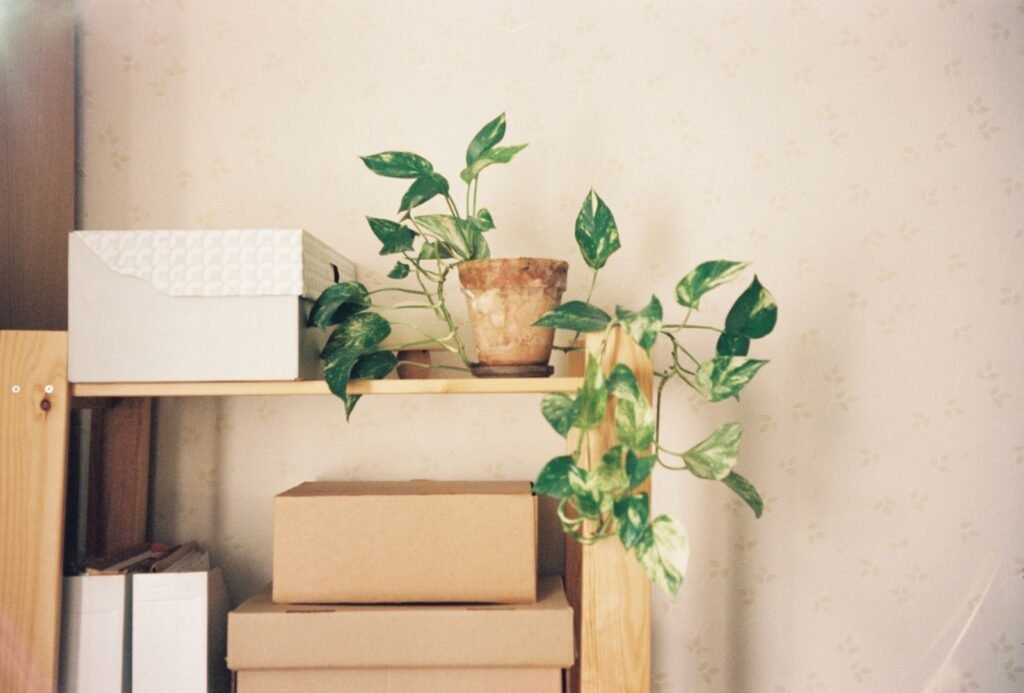
It’s simple physics: heavy cookbooks, file boxes, and kitchen kit go on the bottom shelves where they’re stable and easy to lift. Light things — hats, throws, empty storage boxes — live up high where a wobble costs nothing. A wall that follows this rule is safer and easier to live with.
It also makes the whole wall feel lighter, which matters in a small room where every visual ounce counts. If a shelf feels tippy, it probably is: move the heavy things down one shelf and retest before you load it up properly.
9. Give One Wall One Job — No Mixed Clutter Walls
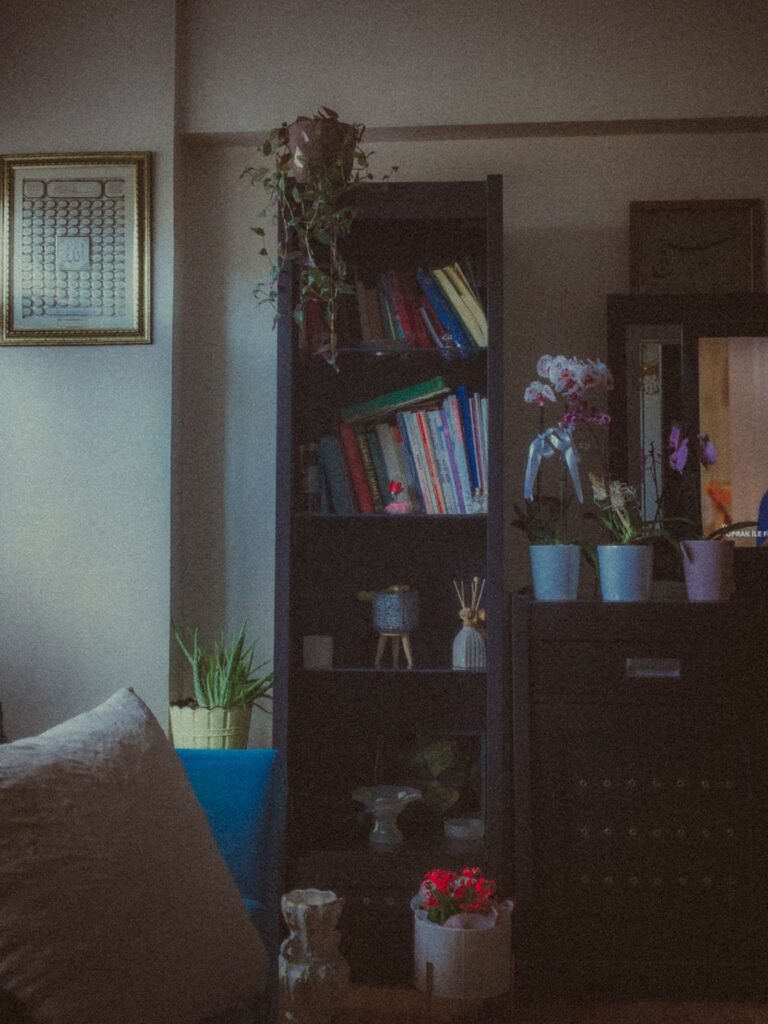
A wall that tries to hold the coats, the books, the craft stash, and the plant collection ends up holding none of them well. Assign each wall a single job: this wall is the library, that wall is the entryway drop-zone, the kitchen wall is for cooking kit. One purpose per wall, no exceptions.
When everything on a wall serves one purpose, you stop scanning the whole room to find things — and tidying becomes obvious. It also photographs beautifully: one tidy, purposeful wall beats four half-done ones every single time.
10. Measure the Wall and Leave the Walkway Clear Before Buying Anything
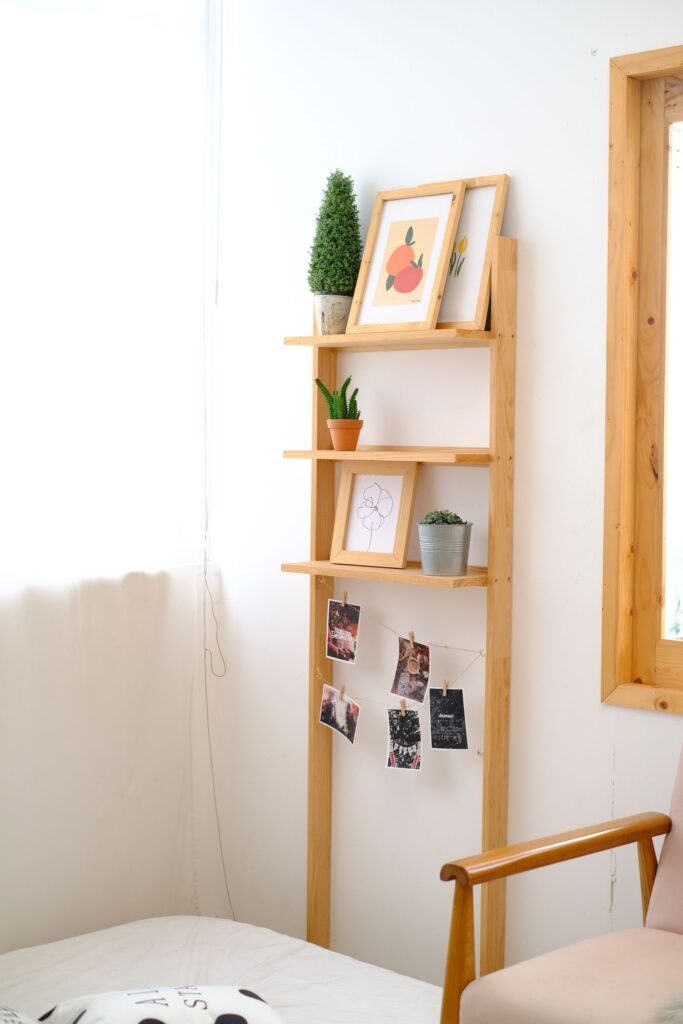
The number-one small-space mistake is buying the shelf first and measuring second. Measure the wall’s width and height, then mark the outline with painter’s tape and live with it for a day. If the tape keeps catching your eye or your elbow, the plan needs shrinking.
Leave at least 75–90 cm of clear walkway in front of any storage wall — 60 cm is the absolute minimum for squeezing past. If the tape outline eats into the walkway, buy narrower or go taller instead of wider. Your future self, carrying laundry past that wall, will thank you.

Final Thoughts
Walls are the most underused square footage in a small home, and none of these ideas asks for a drill, a renovation, or a bigger flat. Start with one wall and one job — a tall narrow shelf or a rail with hooks — and let the habit spread from there. Measure twice, keep the heavy things low, and leave the walkway clear, and your little rooms will feel bigger, calmer, and far easier to live in.