
Small Bathroom Ideas For Sharing With Family
A shared bathroom can turn a calm morning into a queue, a puddle of towels, and a hunt for someone else’s toothpaste. It is rarely about the size of the room. It is about five people using one small space with no agreed system, so every bottle, towel, and minute becomes a negotiation. Add a child who cannot reach the sink, a guest who cannot find a towel, and a toilet roll that runs out silently, and the smallest room in the house causes the biggest arguments.
The fix is not a bigger bathroom or a renovation. It is ten small, renter-friendly habits that give everyone their own patch of the room and one shared rhythm. Each person knows where their things live, shared things have one home, and the jobs that keep the room tidy are agreed once instead of argued about daily. Put these ten ideas in place and the bathroom stops being a battleground and starts working like a team effort.
Key Takeaways
- Give each person one labelled basket for their own products.
- Agree staggered get-ready times once and write the order down.
- Give every towel one hook, at a height each person can reach.
- Keep shared items and spares in one fixed, visible home.
- Reset together for ten minutes on the same day every week.

1. One Basket Per Person, Labelled and Parked in One Spot
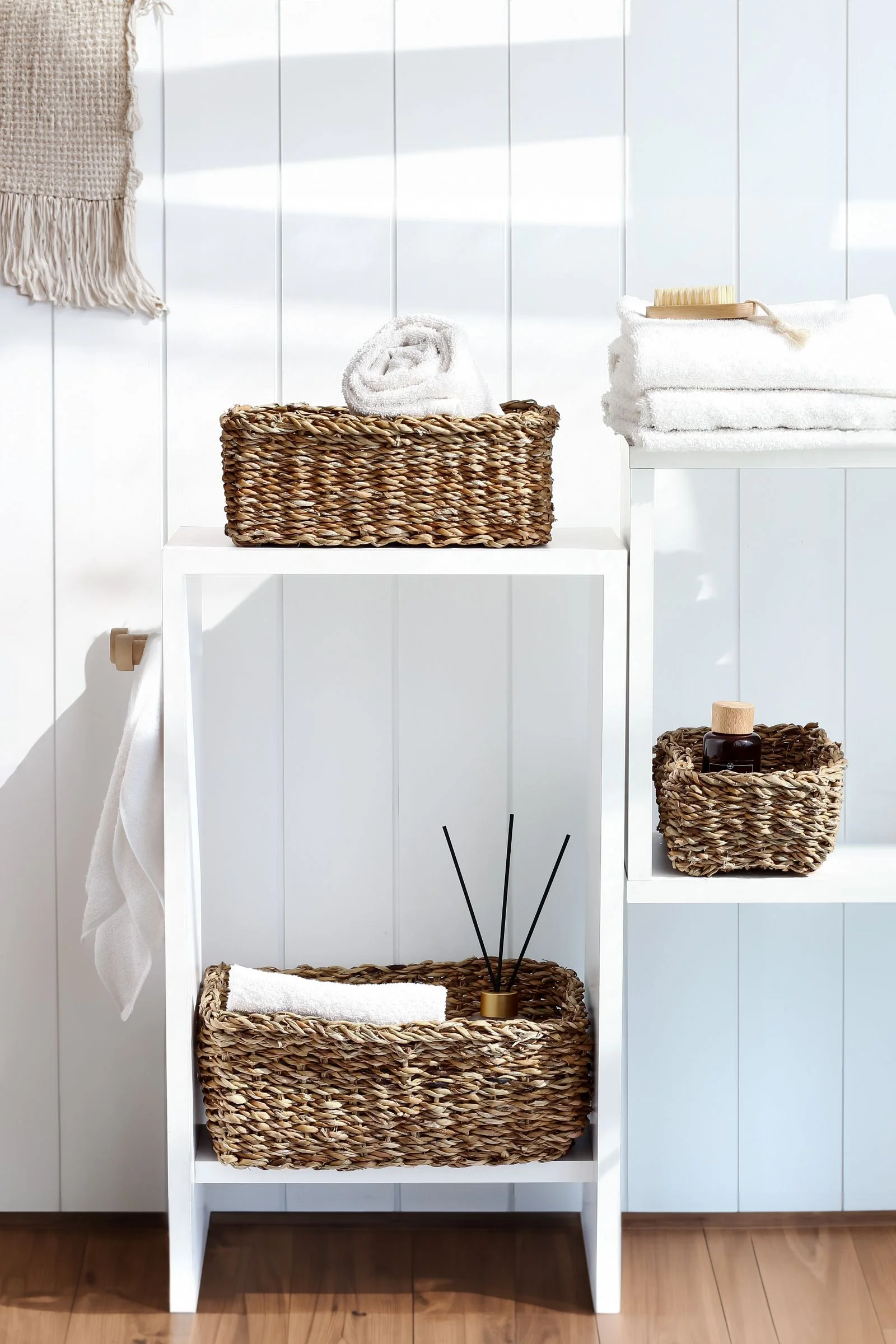
Give every person one basket or caddy for their own products — toothbrush, hairbrush, skincare, and anything else that is theirs alone. Label each basket clearly, even if the labels are just masking tape and a marker, so there is no polite borrowing that turns into a missing toothbrush. The basket is the boundary: if it fits in your basket, it belongs in the bathroom; if it does not, it lives somewhere else.
Park all the baskets in one spot, on one shelf or in one row under the sink, and never let them drift onto the counter. When every basket has the same home, the counter stays clear and nobody has to move three other people’s things to find their own. A child can carry their whole basket to the sink and back again, which means the room tidies itself in the same motion as using it.
2. Shared Items Get One Fixed Home
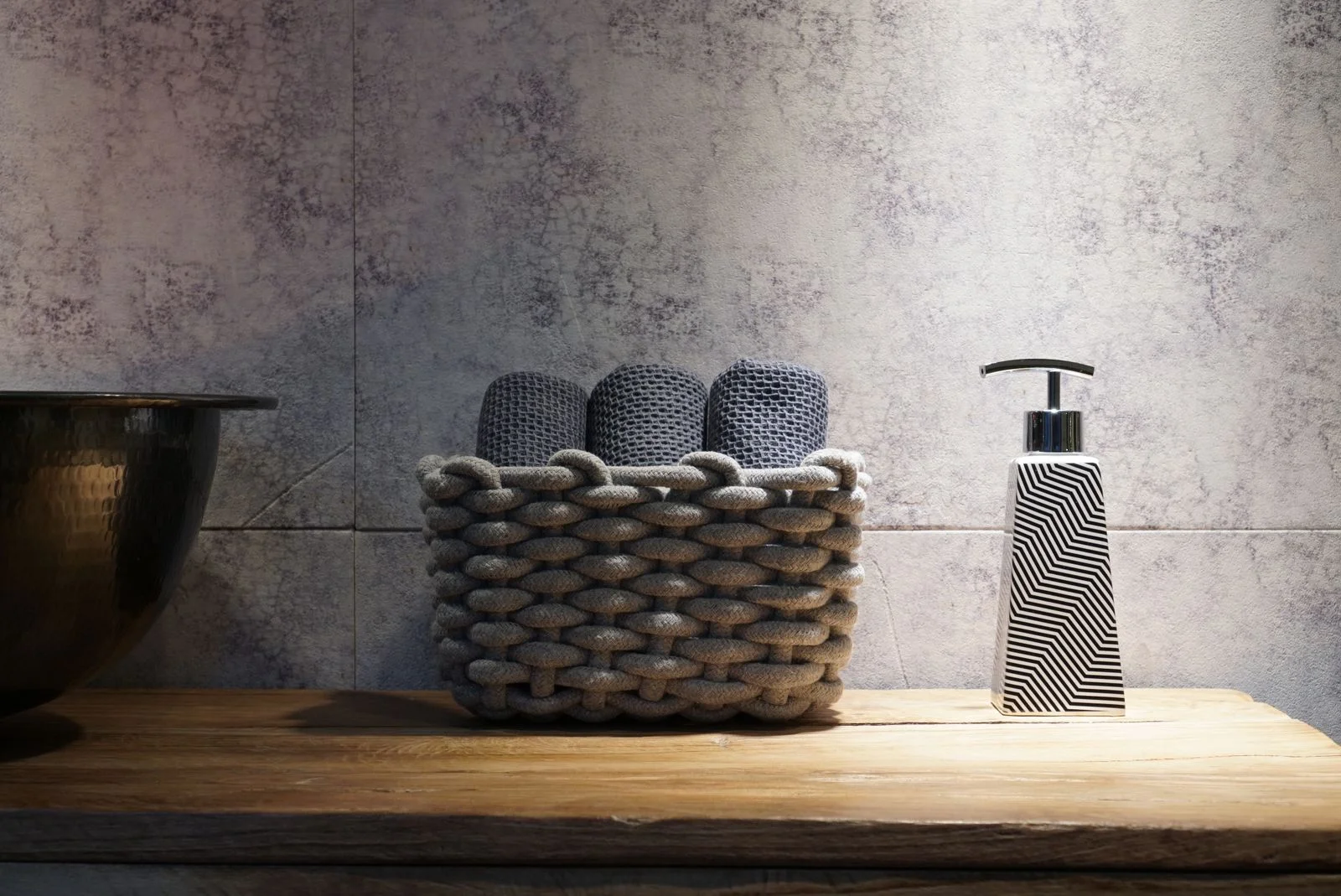
Some things belong to everyone — the hand soap, the toilet paper, the hand towel by the sink — and those are exactly the things that end up everywhere. Choose one fixed home for each shared item and keep it there without exception: soap always on the same tray, spare rolls always in the same basket, the hand towel always on the same rail. When the home never moves, nobody has to ask where anything is.
The fixed home also stops the quiet doubling-up that clutters small bathrooms, where three half-used soaps and two open packets appear because nobody knew one was already there. One soap, one spot, one spare behind it. The room looks calmer, the shopping list gets shorter, and guests can find what they need without asking.
3. Staggered Get-Ready Times, Agreed Once
A small bathroom cannot hold a whole family at once, so stop trying. Agree staggered get-ready times once — who gets the room first, who follows, and how long each slot lasts — and write the order where everyone can see it. The agreement matters more than the exact times: fifteen minutes each, in the same order every morning, beats a daily negotiation every single time.
Keep the slots realistic and kind. The person with the earliest start gets the first slot, children get a slot with an adult nearby, and nobody books the room for an hour when twenty minutes will do. Once the order holds for a week, it stops feeling like a rule and starts feeling like the rhythm of the house.

4. The Step Stool Lives in One Fixed Corner
A child who cannot reach the sink will climb, stretch, and splash — or give up and leave toothpaste everywhere except in their mouth. Give children one sturdy step stool with a wide, non-slip base, and park it in one fixed corner beside the sink, never in the walkway. The corner is part of the rule: the stool lives there, it is used there, and it goes back there.
A stool in the walkway is a trip hazard for everyone, especially in the half-light of an early morning. A stool in a fixed corner is a small, safe station that a child can find without help and an adult can step around without thinking. Check the feet stay grippy and the top stays dry, and the smallest person in the house gets the same easy reach as everyone else.

5. One Hook Per Person — No Towel Pile on the Floor
Towels on the floor are the classic shared-bathroom sight, and they happen because there is nowhere obvious for a towel to go. Fix it with one hook per person, at a height each person can reach, and one colour or label per person so nobody dries their face on someone else’s towel. A hook is cheap, renter-friendly, and takes up almost no wall at all.
The rule that goes with the hooks is simple: a towel lives on its hook or in the wash, never on the floor and never draped over a door. When every towel has a named hook, the floor stays clear, towels dry properly instead of going musty in a heap, and the morning hunt for a dry towel simply disappears.

6. “Your Basket, Your Mess,” Said Out Loud
The kindest thing a family can do for a shared bathroom is to say the rule out loud, once, without blame: your basket, your mess. Each person is responsible for their own basket, their own hook, and the patch of counter they used. It is not about being strict; it is about making the invisible work visible so one person does not silently tidy up after everyone else.
Say it when everyone is calm, not in the middle of a grumble, and agree what happens when a basket overflows — it gets emptied that evening, by its owner. Children especially respond to a rule that is fair and the same for adults. When everyone owns a small patch, nobody owns the whole mess.

7. A Weekly Ten-Minute Family Reset, Same Day Every Week
Even with baskets and hooks, a shared bathroom drifts. Once a week, on the same day, the whole family spends ten minutes resetting it together: baskets back on their shelf, towels swapped, the sink wiped, the floor swept, and anything that migrated to the wrong spot returned home. Ten minutes is short enough that nobody dreads it and long enough to actually work.
Keep the reset on the same day every week so it becomes a habit rather than a chore that needs announcing. Put on a timer, give everyone one job, and finish together. A weekly reset means the room never slides far enough to need a big deep clean, and it teaches children that shared spaces stay nice because everyone pitches in.

8. Spares Where Everyone Can Find Them
Nothing tests a shared bathroom like an empty toilet roll with no spare in sight. Keep spares — toilet paper, fresh towels, soap refills — in one obvious place that every person in the house knows, not hidden in a high cupboard or a bedroom drawer. A basket of spare rolls beside the toilet and a small stack of towels on an open shelf will do.
The spare spot only works if it is restocked before it runs out, so make refilling it part of the weekly reset. When spares are visible and reachable, children can help themselves, guests never have to ask, and nobody is left stranded mid-routine. A shared bathroom runs on spares being findable, not just present.

9. One Shelf for Guests, Family Clutter Hidden
Guests should not have to push past five baskets and a forest of bottles to find a towel. Keep one shelf just for guests, with fresh towels, a spare toothbrush, soap, and a spare roll, and keep the family’s everyday clutter off it. The guest shelf is the room’s welcome mat: everything a visitor needs, in one clean spot, without asking.
The guest shelf also gives the family a reason to keep the rest of the room tidy, because there is a visible standard to match. When guests leave, the shelf gets a quick refresh — towels swapped, items topped up — and it is ready for the next visitor. One shelf, kept guest-ready, makes the whole bathroom feel more generous.

10. A Small “Out Of” List on the Door
Things run out silently in a shared bathroom because the person who notices is rarely the person who shops. Fix it with a small “out of” list on the inside of the door: a notepad, a small whiteboard, or a strip of masking tape with a marker beside it. The moment anyone notices the soap, toothpaste, or toilet paper is low, they write it down — no announcement needed.
Check the list once a week, ideally during the family reset, and add everything on it to the shopping list before it becomes an emergency. The list works because it is in the room where the problem is noticed, not in a phone app nobody opens. One line on a door saves the whole household from the empty-bottle surprise.

Frequently Asked Questions
How do we stop a shared bathroom turning into a queue every morning?
Agree staggered get-ready times once, instead of negotiating every morning. Decide who gets the room first, who follows, and how long each slot lasts, then write the order where everyone can see it. Fifteen minutes each, in the same order every morning, beats a daily argument.
What is the best way to store each person’s toiletries?
Give every person one basket or caddy for their own products, such as a toothbrush, hairbrush and skincare, and label each basket clearly. The basket is the boundary: if it fits in your basket, it belongs in the bathroom, and if it does not, it lives somewhere else.
How do we stop towels ending up on the floor?
Fix one hook per person, at a height each person can reach, with one colour or label per person so nobody dries their face on someone else’s towel. The rule that goes with the hooks is simple: a towel lives on its hook or in the wash, never on the floor.
How do we keep a shared bathroom tidy without nagging?
Say the rule out loud once, when everyone is calm, and agree what happens when a basket overflows. Then hold a weekly ten-minute family reset on the same day: baskets back on their shelf, towels swapped, the sink wiped, the floor swept, and stray items returned home.
How do we stop running out of toilet paper and soap?
Keep spares where everyone can find them, and put a small ‘out of’ list on the inside of the door. The moment anyone notices the soap, toothpaste or toilet paper is low, they write it down, and the list is checked once a week during the family reset.
Final Thoughts
Sharing a small bathroom works when everyone has their own patch and the shared things have shared rules. One basket per person, one hook per towel, one home for shared items, staggered times, a fixed stool corner, spares in plain sight, a guest shelf, a weekly reset, and a little list on the door — none of it needs a renovation or a big budget. Agree the system once, keep it in the same places, and the smallest room in the house becomes the easiest one to share.
Related reading: Small Bathroom Lighting Ideas For Bright Mornings, Small Bathroom Cleaning Ideas That Stop Mould, and Small Bathroom Morning Ideas For Calm Get Ready.
Save this post on Pinterest and read Small Bathroom Lighting Ideas For Bright Mornings.


4 Comments